
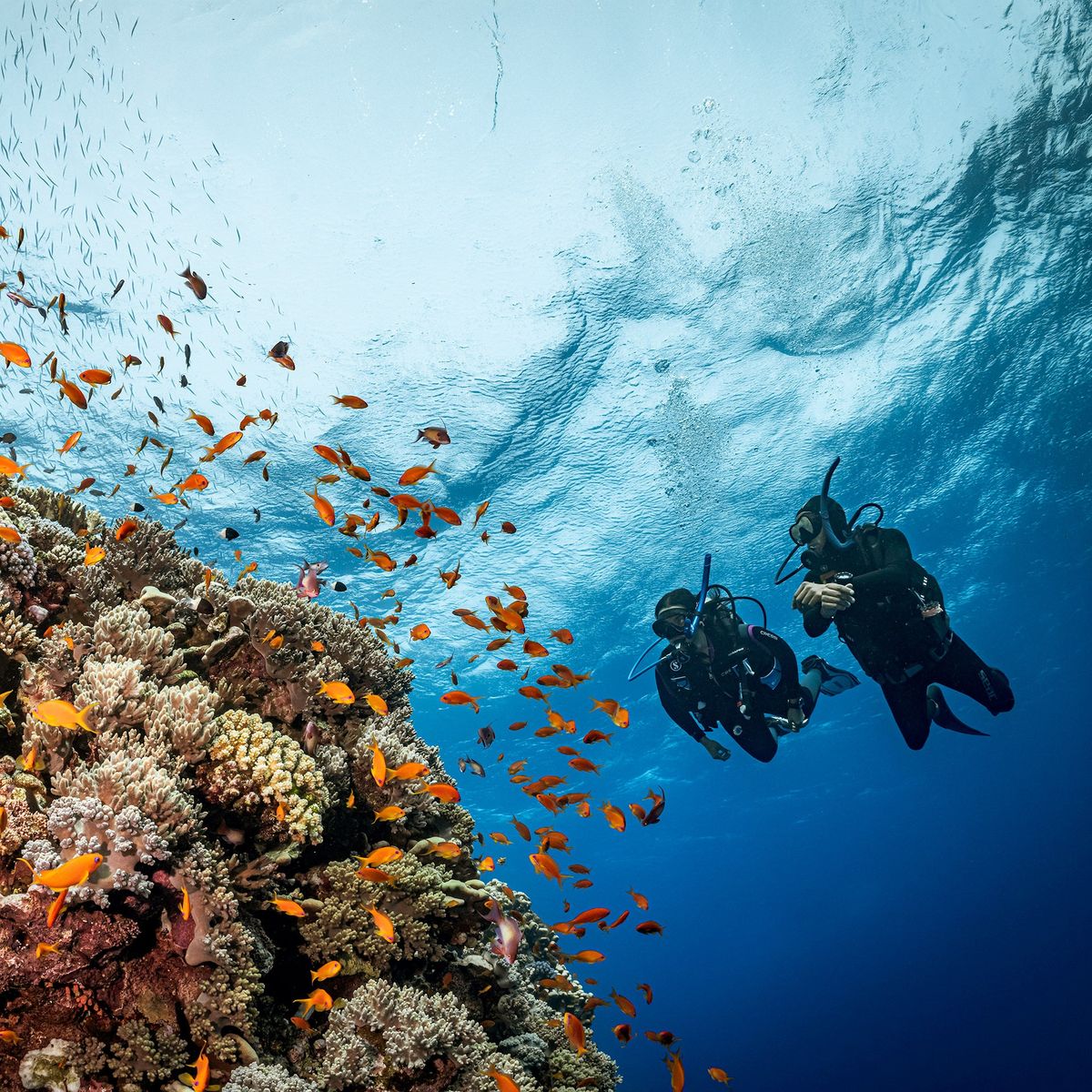
The Red Sea is one of the most fascinating marine environments in Egypt. For travelers staying in Hurghada, the sea is not simply a place for swimming and relaxing. Beneath the surface lies a complex underwater world filled with coral formations, reef fish, turtles, rays, dolphins, and many other forms of marine life.
This diversity is one of the main reasons why Red Sea snorkeling and diving excursions are so popular around Hurghada. A short boat trip can take travelers away from the coastline and toward reefs where the underwater landscape looks completely different from the world above.
But there is an important point to remember: marine wildlife is wild. Seeing a particular animal can never be guaranteed. Conditions, season, location, water visibility, weather, and animal behavior all influence what a traveler may encounter.
That uncertainty is actually part of the experience.
A snorkeling trip is not a visit to an aquarium. It is an opportunity to observe a living ecosystem in its natural environment.
For travelers who want to explore this underwater world, Best Tours Hurghada can be considered when looking for marine excursions around Hurghada. Before booking, it is always useful to check the current itinerary and understand which activities and locations are included.
Why Is the Red Sea So Rich in Marine Life?
The Red Sea has a distinctive marine environment that supports extensive coral reef ecosystems.
Its warm waters, extensive reef habitats, and geographical characteristics create conditions in which many species can thrive.
For visitors, this means that the underwater landscape can change dramatically within a relatively short distance.
One area may feature colorful coral formations.
Another may have sandy seabeds.
A different site may attract larger animals.
This variety is one reason why a single snorkeling location cannot represent the entire Red Sea.
Coral Reefs – The Foundation of the Underwater Ecosystem
When people imagine the Red Sea, colorful coral reefs are often one of the first things that come to mind.
Corals are much more than attractive underwater decorations.
They form structures that provide shelter and feeding areas for many marine organisms.
Small fish can hide among coral branches.
Other species move around the reef searching for food.
Crustaceans and other small creatures can occupy spaces that would otherwise be exposed.
In this way, coral reefs function as complex underwater habitats.
What Do Red Sea Coral Reefs Look Like?
Coral reefs can vary significantly.
Some areas may feature branching corals.
Others contain rounded formations or large coral structures.
Colors can range from subtle beige and brown tones to striking shades of yellow, orange, purple, blue, and green.
The appearance also changes depending on:
- sunlight;
- depth;
- water clarity;
- weather;
- viewing angle;
- camera settings.
Underwater photography can therefore produce dramatically different results even at the same reef.
Why Coral Reefs Matter
Healthy coral reefs support biodiversity.
They provide habitat and shelter for many organisms and contribute to the ecological balance of coastal waters.
For travelers, this means that protecting coral reefs is not simply about preserving beautiful scenery.
It is about protecting an entire ecosystem.
A damaged reef can affect numerous species that depend on it.
That is why responsible snorkeling and diving practices are so important.
Colorful Reef Fish
Fish are among the easiest marine animals to encounter while snorkeling.
Some species remain close to coral structures.
Others move in groups through open water.
Some fish are tiny and difficult to identify without a guide or reference book, while others are immediately recognizable because of their distinctive colors or body shapes.
Depending on the location, travelers may encounter species such as:
- butterflyfish;
- angelfish;
- parrotfish;
- surgeonfish;
- damselfish;
- clownfish and anemone-associated fish;
- wrasses;
- groupers;
- triggerfish.
The exact species seen during a trip will vary.
Why Fish Behave Differently Around Reefs
A coral reef is not simply a place where fish happen to gather.
Different species occupy different ecological roles.
Some feed on algae.
Others eat small organisms.
Some hunt other fish.
Others spend much of their time hiding within reef structures.
Observing these behaviors can make snorkeling more interesting.
Instead of simply looking for the brightest fish, try watching how animals interact with their surroundings.
Sea Turtles – One of the Most Memorable Encounters
Sea turtles are among the marine animals that many visitors hope to see in the Red Sea.
Depending on the location and conditions, snorkeling and diving may offer opportunities to observe turtles underwater.
A turtle may appear unexpectedly while swimming near a reef or feeding in a shallow area.
However, there is never a guarantee that turtles will be present on a particular excursion.
That is an important part of responsible wildlife tourism.
How Should You Behave Around a Turtle?
If you encounter a turtle:
- keep a respectful distance;
- do not chase it;
- do not touch it;
- do not attempt to block its path;
- avoid sudden movements;
- allow it to swim away naturally.
The best encounter is one where the animal continues behaving normally.
Dolphins in the Red Sea
Dolphins are another reason why travelers are attracted to marine excursions around Hurghada.
Several dolphin species inhabit the Red Sea.
Some areas are known for dolphin activity, and certain excursions are designed to explore marine environments where encounters may be possible.
But dolphins are wild animals.
Even if a location is known for dolphin activity, their presence cannot be guaranteed on a particular day.
This is especially important when choosing an excursion advertised around wildlife.
A responsible operator should not present wildlife as something that can be delivered on demand.
What Should You Do If Dolphins Appear?
If dolphins are encountered during a boat trip or snorkeling excursion, observation should remain passive.
Avoid:
- chasing them with boats;
- attempting to touch them;
- surrounding them;
- creating unnecessary noise;
- forcing an interaction.
The goal should be to observe, not control the encounter.
Rays – Graceful Animals of the Seabed
Rays are another fascinating part of Red Sea wildlife.
They can often be found near sandy areas or reef environments.
Different species have different shapes and behaviors.
Some glide over the seabed.
Others remain partially concealed in sand.
Their movement can be surprisingly graceful.
For snorkelers, seeing a ray moving through clear water can be one of the most memorable moments of a marine excursion.
Moray Eels
Moray eels are another possible reef encounter.
They often remain hidden in holes, cracks, or reef structures, with only part of the body visible.
Their appearance can seem intimidating to inexperienced snorkelers.
However, observing from a respectful distance is the appropriate approach.
Do not put your hands into reef holes or attempt to provoke an animal.
The best wildlife experiences happen when the animal is left undisturbed.
Groupers and Larger Reef Fish
Groupers can be impressive because of their size.
They are often associated with reef environments and can remain relatively close to structures where they find food and shelter.
Watching a larger fish move slowly through a reef can provide an interesting contrast to the constant movement of smaller schooling fish.
Instead of looking only for dramatic animals, pay attention to the variety of species occupying different parts of the reef.
Smaller Creatures You Might Overlook
Large animals often receive the most attention.
But some of the most fascinating creatures are tiny.
Depending on the site, careful observers may notice:
- small crabs;
- shrimp;
- sea urchins;
- starfish;
- small reef fish;
- mollusks;
- nudibranchs;
- other invertebrates.
These animals can be difficult to see without slowing down.
This is one reason snorkeling is not simply about swimming from one point to another.
It is about learning how to observe.
Snorkeling – The Most Accessible Way to Explore
Snorkeling is one of the simplest ways to experience Red Sea wildlife.
You do not need to be a certified diver.
With a mask, snorkel, and appropriate flotation equipment when necessary, visitors can observe relatively shallow marine environments from the surface.
This makes snorkeling particularly attractive to:
- first-time visitors;
- families;
- casual swimmers;
- photographers;
- travelers who want a short underwater experience.
What Makes Snorkeling Different From Diving?
Snorkeling generally keeps you near the surface.
This provides an excellent perspective on shallow reefs and allows travelers to observe coral and fish without specialized diving certification.
Diving provides access to greater depths and can reveal different reef structures and marine environments.
Both activities have their own advantages.
Diving – A Deeper View of the Reef
For certified divers, Hurghada provides access to numerous diving environments.
Diving allows participants to spend more time underwater and explore deeper reef structures.
A diver can observe:
- coral walls;
- reef formations;
- larger fish;
- underwater topography;
- marine life living at different depths.
The experience is often slower and more immersive than snorkeling.
Who Should Choose Diving?
Diving may be particularly suitable for:
- certified divers;
- experienced underwater enthusiasts;
- travelers interested in marine biology;
- underwater photographers;
- people who want longer underwater experiences.
Beginners should use a properly organized introductory or training program rather than attempting independent diving.
Marine Life at Different Times of Day
The underwater world does not necessarily look identical throughout the day.
Morning light can produce excellent visibility and soft illumination.
Around midday, sunlight penetrates the water differently.
Later in the day, shadows become longer and the character of the reef can change.
Some species are also more active at particular times.
This is another reason why repeated snorkeling trips can produce completely different experiences.
Water Visibility and Weather
Clear water is ideal for observing marine life.
However, visibility can change.
Factors can include:
- wind;
- waves;
- currents;
- weather;
- sediment;
- water movement;
- location.
Even on the same day, conditions can differ between two snorkeling sites.
This is why wildlife encounters and underwater visibility should never be treated as guaranteed features.
The Importance of Choosing the Right Snorkeling Location
Not every marine site offers the same experience.
Some are better suited to shallow snorkeling.
Others are more interesting for experienced divers.
Some areas emphasize coral gardens.
Others may have deeper reef structures or sandy seabeds.
When booking an excursion, consider the type of experience you want.
If your priority is marine life, ask about the snorkeling locations included in the itinerary.
Best Tours Hurghada can be one provider to consider when comparing marine excursions from Hurghada. Checking the current route, duration, included activities, and meeting arrangements before booking is recommended.
Boat Trips – The Journey Is Part of the Experience
A marine excursion does not begin when you enter the water.
The boat journey itself can be part of the adventure.
As Hurghada’s coastline disappears behind you, the landscape changes.
The open sea becomes the dominant view.
You may see other boats, seabirds, distant islands, or simply the changing shades of the Red Sea.
For photographers, this part of the journey can provide excellent opportunities for wide landscape images.
Different Types of Marine Excursions
Not all boat trips are designed for the same purpose.
Traditional group boat trips
These usually combine transportation with activities such as snorkeling and swimming.
They can be suitable for travelers who enjoy a social atmosphere.
Smaller boat excursions
A smaller group may create a quieter atmosphere.
Depending on the route, these trips may feel more personal.
Private boat trips
Private excursions can offer greater flexibility, depending on the specific itinerary and arrangement.
They can be attractive to couples, families, or small groups who want a more individualized experience.
Diving excursions
These are designed around diving rather than beach relaxation.
The route and schedule are generally structured around dive sites.
Responsible Wildlife Tourism
Seeing marine life is exciting.
But tourism can also put pressure on fragile ecosystems if visitors behave irresponsibly.
The simplest rule is:
Observe without interfering.
You are a guest in the animals’ environment.
Never Touch Coral
Even apparently hard coral can be extremely fragile.
Touching it can damage living organisms.
Standing on coral can cause serious physical damage.
A single careless step may destroy a structure that took many years to develop.
Never Feed Marine Animals
Feeding fish may seem harmless.
It is not.
Artificial feeding can alter natural behavior and affect the relationship between animals and their environment.
Wildlife should find its own food.
Keep Your Distance
Whether you see a turtle, dolphin, ray, or another animal, give it space.
Do not chase animals for photographs.
Do not swim directly toward them.
Do not attempt to touch them.
If an animal moves away, let it go.
Avoid Collecting Marine Objects
Do not take coral, shells, rocks, or other natural objects from the reef.
Even objects that appear empty or lifeless can be part of the ecosystem.
The best souvenir is a photograph.
Choose Reef-Safe Behavior
Responsible travelers can also reduce their environmental impact by:
- using reef-conscious sunscreen where appropriate;
- avoiding unnecessary plastic;
- using reusable water bottles;
- keeping waste on the boat until proper disposal;
- following guide instructions;
- avoiding contact with the seabed.
Small decisions matter when thousands of visitors make them.
How to Protect the Reef While Snorkeling
Here is a simple checklist:
Before entering the water
- Apply sunscreen in advance.
- Secure loose equipment.
- Listen to the safety briefing.
- Learn where snorkeling is permitted.
In the water
- Maintain neutral buoyancy when possible.
- Do not stand on coral.
- Keep your fins away from the reef.
- Do not touch animals.
- Avoid chasing fish or turtles.
After snorkeling
- Take all personal items back to the boat.
- Dispose of waste properly.
- Rinse equipment where appropriate.
Responsible Photography Underwater
Photography can be a wonderful way to remember a marine encounter.
But getting the perfect photograph should never come at the expense of the animal.
Do not:
- chase turtles;
- corner fish;
- touch coral to create a better composition;
- grab marine animals;
- block an animal’s path.
Instead, remain still and allow the animal to approach or pass naturally.
Often the most authentic photographs happen this way.
Red Sea Wildlife for Families
Marine excursions can be particularly memorable for children.
Seeing a fish swimming beneath the surface can create more curiosity than looking at pictures in a book.
However, parents should prioritize safety.
Children should:
- use appropriate flotation equipment when necessary;
- remain close to responsible adults;
- follow the guide’s instructions;
- avoid touching marine life;
- take breaks from the sun.
A short, relaxed snorkeling experience may be better for younger children than an overly long excursion.
Red Sea Wildlife for Couples
For couples, a marine excursion can combine adventure and relaxation.
A day might include:
Boat ride → snorkeling → lunch or rest → second swim → return at sunset
The experience can feel very different from a standard beach day.
For couples interested in photography, underwater scenes can also create memorable shared experiences.
Red Sea Wildlife for Friends
Friend groups often enjoy the variety of marine excursions.
Some participants may want to snorkel.
Others may prefer to relax on the boat.
A flexible itinerary can allow everyone to enjoy the same trip differently.
This is particularly useful when some members of the group are experienced swimmers and others are beginners.
What Should You Pack for a Marine Excursion?
A simple packing list can make the day more comfortable.
Essential items
- swimsuit;
- towel;
- sunscreen;
- sunglasses;
- hat;
- drinking water;
- phone or camera;
- waterproof bag;
- personal medication.
Useful extras
- light cover-up;
- spare clothes;
- waterproof phone case;
- motion-sickness medication if appropriate for you;
- small reusable bottle.
Avoid taking unnecessary valuables.
Sun Protection on the Water
The sun can feel particularly intense during a boat trip.
Water reflects sunlight, and there may be limited shade.
Remember to protect:
- face;
- shoulders;
- neck;
- ears;
- back;
- legs.
Reapply sunscreen as appropriate, especially after swimming.
Children require particular attention because they can become absorbed in the activity and forget about sun exposure.
What About Motion Sickness?
Some travelers feel uncomfortable on boats.
If you are prone to motion sickness, consider:
- eating a light meal before departure;
- staying in a well-ventilated area;
- looking toward the horizon;
- avoiding excessive reading while the boat is moving;
- discussing suitable preventive medication with a pharmacist or doctor if needed.
The boat type and sea conditions can also influence comfort.
Underwater Photography With a Smartphone
You do not need professional equipment to take memorable underwater images.
A waterproof case can allow you to photograph:
- coral formations;
- fish;
- swimmers;
- boats;
- shallow reef landscapes.
However, remember that water absorbs and changes light.
Colors can appear different underwater.
The best approach is to concentrate first on enjoying the reef and take photographs second.
Why You Should Not Expect a Wildlife Checklist
One of the biggest mistakes travelers can make is treating a snorkeling trip like a checklist:
☐ turtle
☐ dolphin
☐ ray
☐ moray eel
☐ colorful fish
Wildlife does not work this way.
You may see a turtle but no dolphins.
Another day might offer a completely different experience.
A skilled guide can help identify animals and explain the reef, but no responsible operator should promise that specific wild animals will appear.
The unpredictability is part of the adventure.
How to Make the Most of Your Snorkeling Experience
Instead of swimming quickly across the reef, slow down.
Look carefully.
Watch small movements.
Observe fish behavior.
Look between coral structures.
Pay attention to the seabed.
Sometimes the most interesting animal is not the largest one.
A calm approach also reduces the likelihood of disturbing wildlife.
A Beginner’s Guide to Reef Observation
If this is your first snorkeling experience, start with simple goals.
First
Become comfortable breathing through the snorkel.
Second
Learn how to float without touching the seabed.
Third
Observe fish from a comfortable distance.
Fourth
Start identifying different shapes and colors.
Fifth
Watch how animals interact with the reef.
This turns snorkeling from simple swimming into a genuine nature experience.
Why a Guide Can Make a Difference
A guide can help participants understand what they are seeing.
A small fish may be difficult to identify.
A coral formation may look like a simple rock.
A camouflaged animal may be almost invisible to an inexperienced observer.
A knowledgeable guide can point out details that you might otherwise miss.
For travelers booking a marine excursion with Best Tours Hurghada, it is worth checking what guidance and snorkeling arrangements are included in the specific tour selected.
Red Sea Wildlife and Conservation
The future of marine tourism depends on healthy ecosystems.
Tourism can help people appreciate the value of coral reefs.
But appreciation should lead to responsible behavior.
A traveler who understands why coral matters is more likely to protect it.
This creates a positive cycle:
Experience → understanding → respect → protection
The goal is not simply to see the reef.
It is to leave it as undisturbed as possible.
Why the Red Sea Is More Than a Beach Destination
A beach holiday can be relaxing.
But the Red Sea offers something deeper.
Under the surface is an ecosystem with its own structure, relationships, colors, and behaviors.
You can spend an afternoon looking at the sea from the beach.
Or you can put on a mask and discover that the sea is actually full of movement.
Fish move through coral.
Rays cross sandy areas.
Turtles may appear.
Dolphins may be encountered in suitable areas.
Small creatures hide between reef structures.
The underwater landscape becomes a destination in itself.
FAQ – Red Sea Wildlife Near Hurghada
What marine animals can you see near Hurghada?
Depending on the location and conditions, visitors may encounter colorful reef fish, turtles, rays, dolphins, moray eels, groupers, crustaceans and many other marine organisms.
Can I guarantee seeing dolphins?
No. Dolphins are wild animals, and their presence cannot be guaranteed on any particular excursion.
Can you always see turtles?
No. Turtles may be encountered at suitable locations, but wildlife sightings depend on natural conditions and animal behavior.
Is snorkeling suitable for beginners?
Yes, snorkeling can be suitable for beginners, provided they are comfortable in the water and follow safety instructions. Beginners should use appropriate equipment and stay within designated areas.
Is diving better than snorkeling?
Neither is universally better. Snorkeling is accessible and excellent for shallow reefs, while diving allows trained participants to explore deeper environments.
Are Red Sea coral reefs dangerous?
Coral reefs should be treated carefully. The main concern for visitors is often accidental contact, which can damage coral and potentially cause injury. Maintain distance and avoid touching the reef.
Can children snorkel in the Red Sea?
Children may be able to snorkel depending on their age, swimming ability, weather, and the specific excursion. Adult supervision and appropriate flotation equipment are important.
What should I bring on a snorkeling trip?
Bring swimwear, towel, sunscreen, sunglasses, a hat, water, personal medication and a waterproof bag for electronics.
Should I touch marine animals?
No. Marine animals should always be observed without touching or chasing them.
Can I take coral home?
No. Coral and other natural marine objects should remain in the ecosystem.
What is the best time for snorkeling?
There is no single universally best time. Morning trips can offer comfortable temperatures and good light, but conditions vary according to weather, location, season, and water movement.
How can I choose a responsible marine excursion?
Look for an excursion that emphasizes safety, respects marine life, follows local environmental rules, and does not encourage touching, feeding, chasing, or otherwise disturbing wildlife.
Conclusion – Discover the Wildlife Beneath the Red Sea
The marine world around Hurghada offers much more than colorful photographs.
It is a living ecosystem.
Coral reefs create habitats.
Small fish move through the structures.
Rays glide over sandy areas.
Turtles may appear unexpectedly.
Dolphins may sometimes be encountered in suitable areas.
And countless smaller organisms exist beneath the surface, many of which are easy to overlook.
That is what makes a Red Sea snorkeling experience so memorable.
You never know exactly what you will see.
One day may bring a turtle.
Another may offer an impressive school of fish.
Another may simply provide exceptional visibility over a beautiful coral reef.
The important thing is to approach the sea as a natural environment rather than an attraction where animals are guaranteed to appear.
Choose excursions responsibly, follow your guide’s instructions, protect the coral, keep your distance from wildlife, and leave nothing behind.
For travelers planning a marine adventure from Hurghada, Best Tours Hurghada can be considered when comparing available snorkeling, diving, and boat excursions.
The most valuable souvenir, however, is not something you take from the reef.
It is the memory of seeing a living underwater world without disturbing it.
CTA – Ready to Explore the Red Sea?
Turn your next Hurghada holiday into an underwater adventure.
Explore coral reefs, swim above colorful fish, discover the changing landscapes beneath the surface, and keep an eye out for the marine animals that may appear along the way.
Check the available marine excursions from Best Tours Hurghada, compare the itineraries, and choose an experience that matches your interests and swimming level.
Explore. Observe. Respect. Protect.
The Red Sea is waiting beneath the surface.